

The global hardware landscape is undergoing a massive geopolitical realignment, and the India semiconductor boom is officially at the center of it. For decades, the nation relied entirely on foreign supply chains to import the silicon powering its smartphones, cars, and digital infrastructure. In 2026, that narrative ends.
A rapid shift toward domestic manufacturing is transforming the subcontinent into a global silicon powerhouse. By moving from import dependency to local fabrication, the government and private sector are turning the vision of Atmanirbhar Bharat tech into a tangible, high-tech reality.
Here is exactly how this historic transition is taking shape this year.
Driving the India Semiconductor Boom at Dholera
The undisputed crown jewel of the India semiconductor boom is the massive $11 billion (₹91,000 crore) facility rising in Gujarat. The Dholera semiconductor plant, spearheaded by Tata Electronics, represents the largest single leap in India’s modern industrial history.
This is not a distant blueprint or a speculative roadmap. The Dholera mega-fab is operating on an aggressive timeline and is officially on track to roll out its very first batch of “Made-in-India” chips by the end of 2026.
- Unprecedented Scale: The facility is designed to output up to 50,000 wafer starts per month (WSPM) once fully operational.
- Job Creation: Beyond just hardware, the plant is generating over 20,000 highly skilled direct and indirect jobs, creating a massive talent pipeline for electronic engineers.
- Ecosystem Building: The fab acts as a magnet, drawing in hundreds of secondary suppliers, packaging firms, and testing facilities to the Gujarat tech corridor.
Powering the AI Revolution and National Security
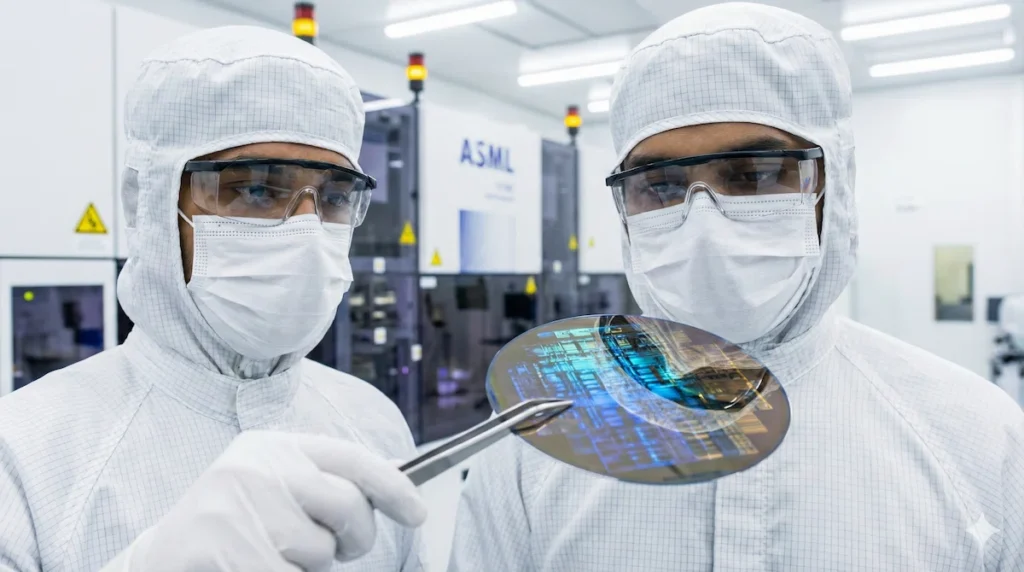
While producing any silicon locally is a win, the specific types of processors being manufactured matter deeply. The facility is focusing heavily on producing 28nm to 55nm nodes.
While these are not the ultra-tiny single-digit nodes found in flagship smartphones, they are the absolute workhorses of the modern economy. These nodes are critical for producing Tata Electronics AI chips, which will serve as the foundational hardware for India’s rapidly expanding AI data centers.
Additionally, manufacturing these specific nodes locally provides massive strategic advantages:
- Electric Vehicles (EVs): The automotive sector relies heavily on 28nm chips for power management and smart displays. Local supply prevents the crippling chip shortages seen in recent years.
- Defense & Aerospace: Utilizing locally fabricated silicon ensures that military communications and defense tech are secure from foreign tampering or supply chain blockades.
By securing the production of these essential chips, the India semiconductor boom severely reduces the nation’s reliance on factories in Taiwan and China.
Upgrading to World-Class Infrastructure
To compete on the global stage, you need the absolute best equipment on the planet. In January 2026, the Dholera plant hit a major milestone that silenced international skeptics: securing top-tier lithography tools.
The integration of advanced ASML lithography India infrastructure signals a massive leap in credibility. ASML, the Dutch manufacturing giant, builds the most complex and precise chip-making machines in the world. By outfitting the Dholera plant with these highly advanced ultraviolet lithography systems, Tata Electronics is proving that India is not just building a budget factory; it is building a premium, world-class mega-fab.
This level of technological investment guarantees that the India semiconductor boom will yield chips with the highest global standards for defect rates and power efficiency.
Want to see the macro picture? Read our massive 3,600-word Ultimate Guide on the State of AI in India 2026 here.
FAQs
What exactly is the India semiconductor boom?
It refers to the rapid, multi-billion-dollar expansion of domestic chip manufacturing in India, transitioning the country from a consumer of foreign silicon to a global producer.
When will the Dholera semiconductor plant start producing chips?
The $11 billion Tata Electronics facility in Dholera, Gujarat, is scheduled to roll out its first commercially viable “Made-in-India” chips by the end of 2026.
Why are the 28nm to 55nm chip nodes so important?
These chip sizes are the backbone of modern industry. They are the exact specifications required to power electric vehicles, telecommunications hardware, defense systems, and massive AI data centers without relying on imported technology.