
Key Takeaways
- The Software Behind the Hardware: India’s manufacturing surge relies entirely on moving physical goods. AI is the invisible software layer making the “Make in India” boom mathematically possible.
- Beating the Chaos: By leveraging predictive freight routing, trucking fleets are finally outsmarting India’s complex geography, unpredictable monsoons, and notorious highway bottlenecks.
- The 10-Minute Miracle: The quick-commerce revolution in Tier-1 cities is powered by last-mile delivery AI and automated dark stores, optimizing chaotic city grids in real-time.
India’s geography is notoriously complex. Moving a shipment from a factory in Tamil Nadu to a distributor in Delhi involves navigating fractured interstate borders, unpredictable monsoon weather, and some of the most congested transport arteries in the world. For decades, this fragmentation resulted in billions of dollars lost to transit delays and fuel inefficiencies.
But a massive structural shift is underway. The integration of AI in Indian logistics is fundamentally untangling this messy supply chain. While shiny consumer AI tools capture the mainstream headlines, the real economic value—the kind that venture capitalists are pouring dry powder into—is happening behind the scenes. It is the intelligent software layer powering the physical hardware of the nation’s economic growth.
Predictive Freight Routing: Outsmarting Geography
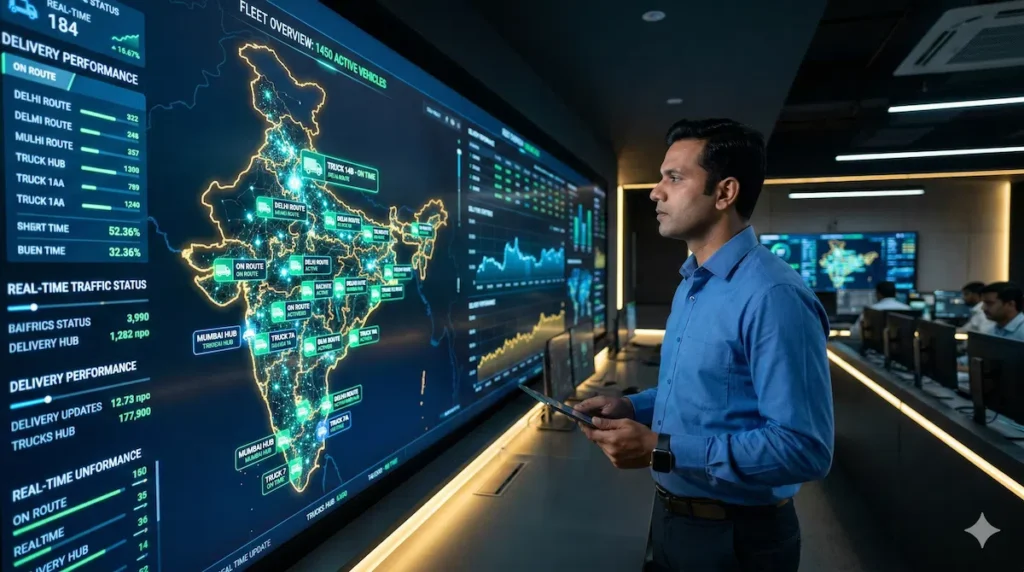
Historically, Indian trucking fleets relied on the localized knowledge of veteran drivers. If a highway flooded or a major accident blocked a toll plaza, a truck could sit idle for days.
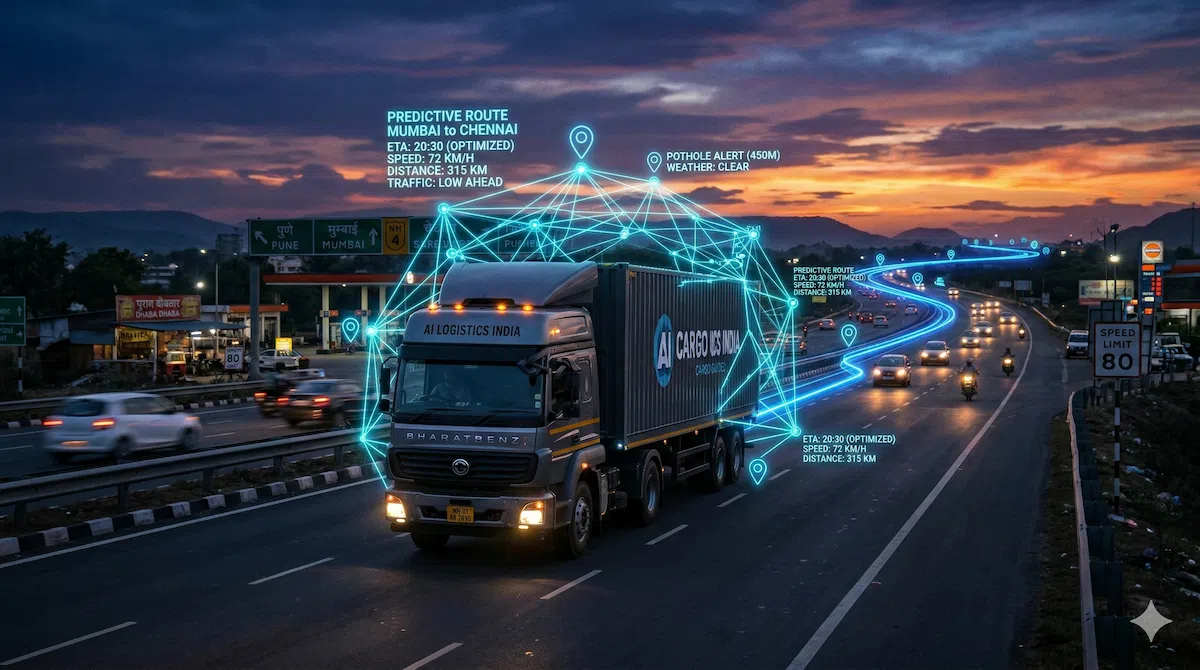
Today, supply chain AI startups are replacing guesswork with massive data processing. Through predictive freight routing, AI platforms analyze millions of data points in real-time—including live traffic density, hyper-local weather forecasts, and historical road condition data.
- Dynamic Rerouting: If a major bottleneck forms on the NH48, the AI instantly pushes a new route to the driver’s smartphone, calculating the exact fuel tradeoff for taking a longer but faster detour.
- Predictive Maintenance: Sensors on the trucks feed data back to the AI, predicting engine failures before they happen, preventing stranded cargo on remote highways.
This intelligence is drastically reducing fuel burn and slashing transit times, proving that Make in India tech isn’t just about building factories; it is about building the nervous system that connects them.
The Quick-Commerce War: Last-Mile Delivery & Warehouse Automation
While long-haul freight moves the bulk, the most aggressive AI battleground is happening in the final few kilometers. The explosion of quick-commerce (promises of 10-minute grocery and electronics deliveries) in cities like Bengaluru, Mumbai, and Gurgaon has created a logistical nightmare that only machine learning can solve.
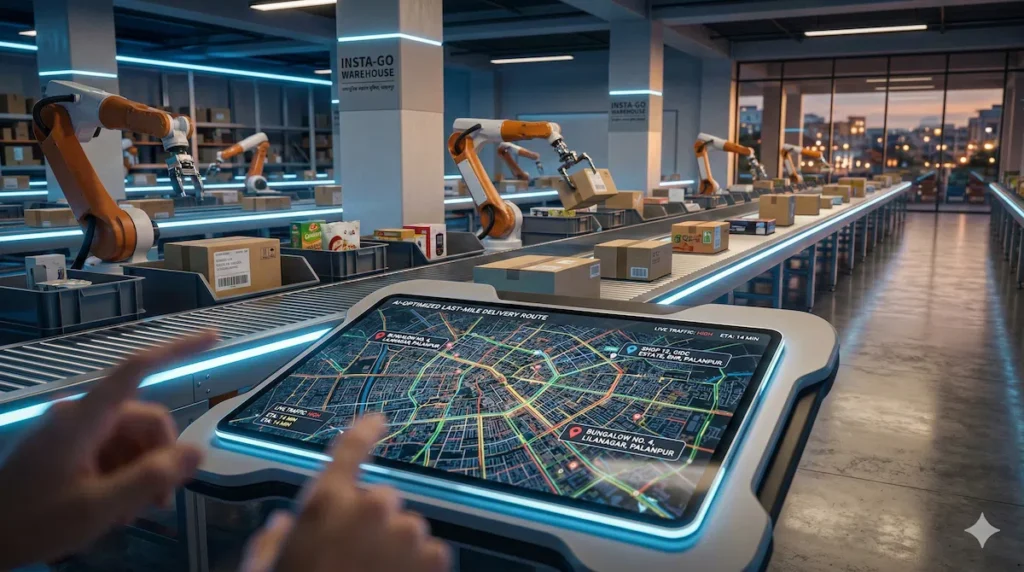
To achieve this, e-commerce giants are investing heavily in warehouse automation India. Inside hyper-local “dark stores,” AI algorithms predict exactly which products will be ordered in specific neighborhoods based on the day of the week, local festivals, or even a sudden rainstorm.
Once an order drops, last-mile delivery AI takes over. It doesn’t just draw a straight line on a map; it calculates the exact route through narrow, chaotic Tier-1 city streets, grouping multiple orders for a single delivery rider to maximize efficiency and ensure the ice cream doesn’t melt before arrival.
The Market Impact in India
Why does this matter to the broader Indian economy? The logistics sector currently accounts for a massive chunk of India’s GDP, but it has historically been highly inefficient compared to global standards.
- Slashing Logistics Costs: The Indian government’s National Logistics Policy aims to bring down the cost of logistics from roughly 13-14% of GDP to single digits. B2B logistics software is the primary weapon to achieve this, saving enterprises billions.
- Unlocking Capital: Faster transit times mean inventory spends less time sitting in trucks. This frees up working capital for small and medium enterprises (SMEs), injecting velocity directly into the economy.
- The VC Perspective: Investors know that enterprise logistics is a “sticky” business. Once a major transport fleet integrates an AI co-pilot, they rarely churn. This makes B2B supply chain startups incredibly resilient and highly profitable.
The Verdict
The shiny, generative AI chatbots get the press, but B2B logistics AI is where the actual money is being made. By solving India’s unique infrastructural challenges with predictive models and automated warehousing, these startups are ensuring that the nation’s manufacturing and e-commerce ambitions aren’t bottlenecked by bad roads. For investors and enterprise founders, fixing the Indian supply chain is one of the most lucrative deep-tech opportunities of the decade.
Want to see the macro picture? Read our massive 3,600-word Ultimate Guide on the State of AI in India 2026 here.
FAQs
How is AI reducing logistics costs in India? AI reduces costs by optimizing routes to save fuel, predicting maintenance to prevent vehicle breakdowns, and automating warehouse inventory to reduce storage overhead and human error.
What is predictive freight routing? It is the use of machine learning to analyze real-time data like weather, traffic, and road conditions to calculate the fastest, most fuel-efficient route for commercial transport trucks.
Why are quick-commerce companies relying on AI? Delivering goods in under 10 minutes in congested Indian cities is impossible manually. AI is required to predict local demand, automate inventory packing, and instantly map the most efficient last-mile route for delivery riders.