
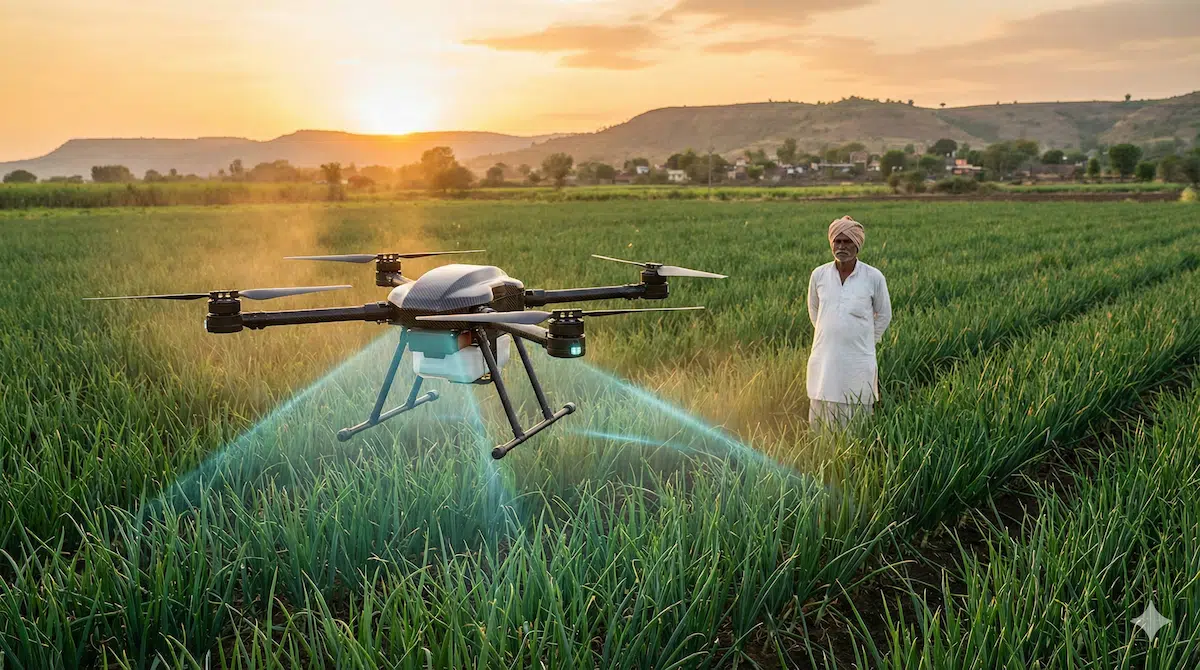
The integration of AI in Indian agriculture is moving rapidly from concept to reality, completely transforming how traditional farming operates. For decades, farmers in states like Maharashtra have battled unpredictable weather, rising labor costs, and devastating pest infestations. Today, a new wave of technological innovation is shifting the balance of power back to the farmers.
Backed by initiatives like the recently launched MahaAgri-AI Policy 2025–2029, Maharashtra has become the first state to formally embed artificial intelligence into its agricultural framework. At the forefront of this revolution are AI-powered drones and data-driven analytics, which are actively protecting high-value crops like onions from widespread destruction.
The Role of Agri-Tech Startups in Drone Farming
The rapid modernization of the farming sector is being heavily driven by domestic agri-tech startups. Companies such as Vaimanika Aerospace and Salam Kisan are deploying Unmanned Aerial Vehicles (UAVs) equipped with advanced multispectral and hyperspectral sensors.
Instead of relying on massive cloud infrastructure, these startups process data directly at the edge or through mobile applications tailored for low-connectivity rural areas. These drones can cover vast agricultural lands in a fraction of the time it takes for manual scouting. For example, modern agricultural drones can scan a 10-acre farm in under an hour—a task that previously took several days of manual labor.
Precision Crop Disease Detection
For onion farmers in regions like Nashik and Pune, early intervention is critical. Onions are highly susceptible to fast-spreading fungal infections such as Purple Blotch and Downy Mildew, which can decimate an entire harvest if left unchecked.
This is where AI-driven crop disease detection becomes a game-changer. Drones fly over the fields capturing high-resolution RGB imagery and analyzing the Normalized Difference Vegetation Index (NDVI).
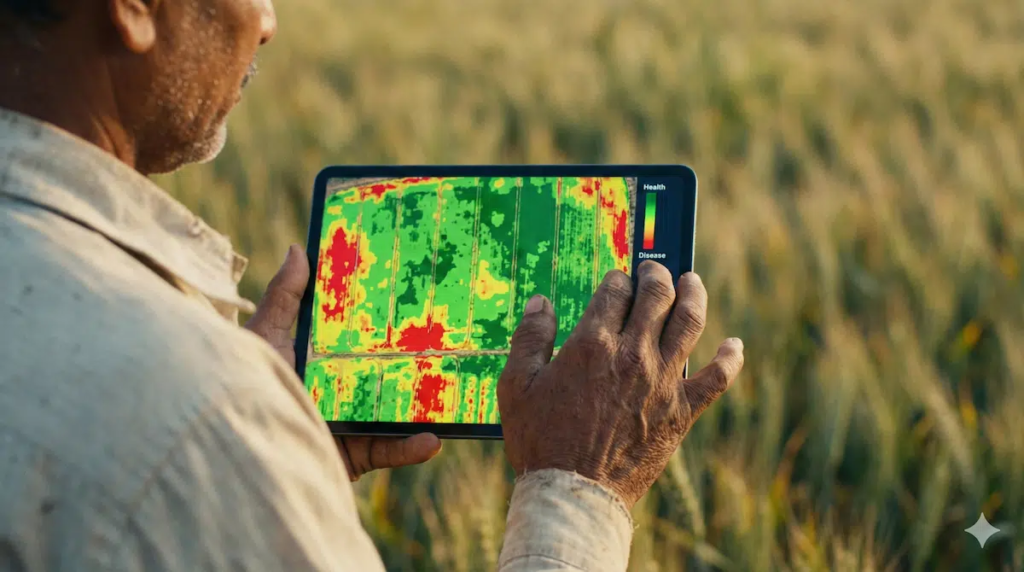
The AI algorithms process these light reflections to detect subtle changes in plant moisture and chlorophyll levels long before visible symptoms appear on the leaves.
Once a hotspot is identified, the drones can be programmed to execute precision spraying. By applying targeted pesticides only to the infected zones, farmers prevent chemical runoff and maintain the health of the surrounding soil.
The Financial Impact on Local Farmers
The financial benefits of integrating AI tools are undeniable. According to recent case studies across Maharashtra, precision farming techniques have allowed farmers to reduce pesticide and fertilizer usage by up to 25%.
Furthermore, early disease detection and targeted interventions have resulted in yield increases ranging from 15% to 25% for various crops. By lowering input costs and maximizing harvest quality, AI in agriculture is no longer just a luxury for large corporations; it is an accessible, highly profitable tool for the everyday Indian farmer.
FAQs
How is AI used in Indian agriculture? Artificial intelligence is used for weather forecasting, soil health analysis, automated irrigation, and drone-based monitoring. It helps farmers make data-driven decisions to increase crop yields and reduce waste.
What is crop disease detection using drones? Drones equipped with multispectral cameras capture field data, which AI algorithms analyze to identify early signs of plant stress, nutrient deficiencies, and fungal infections before they become visible to the human eye.
How are agri-tech startups helping farmers? Agri-tech startups provide farmers with affordable access to advanced technologies like AI drones, real-time market pricing, and predictive analytics, significantly reducing farming costs and improving overall profitability.