
Key Takeaways
- Software Over Hardware: The real battle in India’s electric mobility revolution isn’t about building the flashiest scooter; it is about writing the intelligent software that keeps batteries safe in extreme conditions.
- Surviving 45°C Summers: AI-powered battery management systems are replacing basic sensors, predicting thermal runaway before it starts and dynamically extending battery lifespans.
- Killing Range Anxiety: Predictive AI is mapping out grid availability and analyzing hyper-local traffic to ensure delivery drivers and auto-rickshaws never get stranded mid-route.
India is undergoing a massive electric mobility revolution. In 2025 alone, the country recorded over 2.36 million electric vehicle sales, capturing more than 8% of the overall automobile market. However, unlike Western markets where luxury electric cars dominate the narrative, India’s EV story is driven by the masses. Two-wheelers and three-wheelers make up the vast majority of total EV volumes.
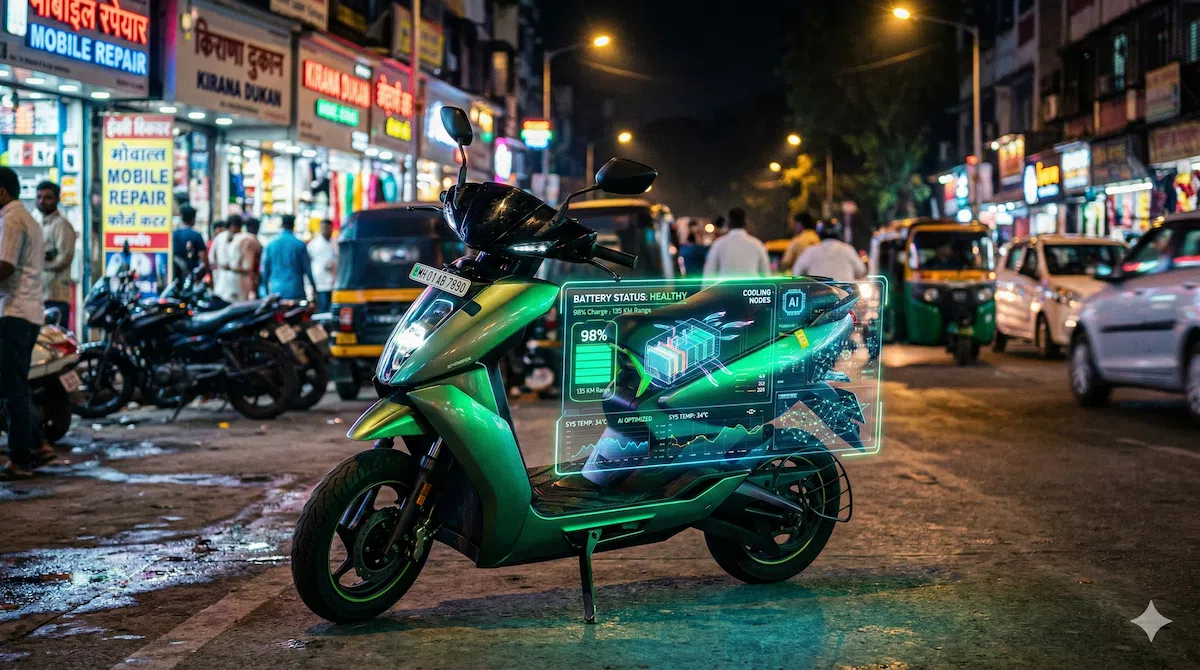
This rapid adoption faces severe environmental hurdles: extreme 45°C summer heat, chaotic traffic patterns, and unpredictable charging infrastructure. To solve these physical problems, the smartest electric vehicle startups India has to offer are realizing that hardware alone isn’t enough. The true differentiator is AI in Indian EV sector. By utilizing advanced machine learning, founders are building the invisible software layer needed to keep batteries safe, optimize charging, and ensure fleet reliability across the subcontinent.
Surviving the Heat: AI Battery Management Systems (BMS)
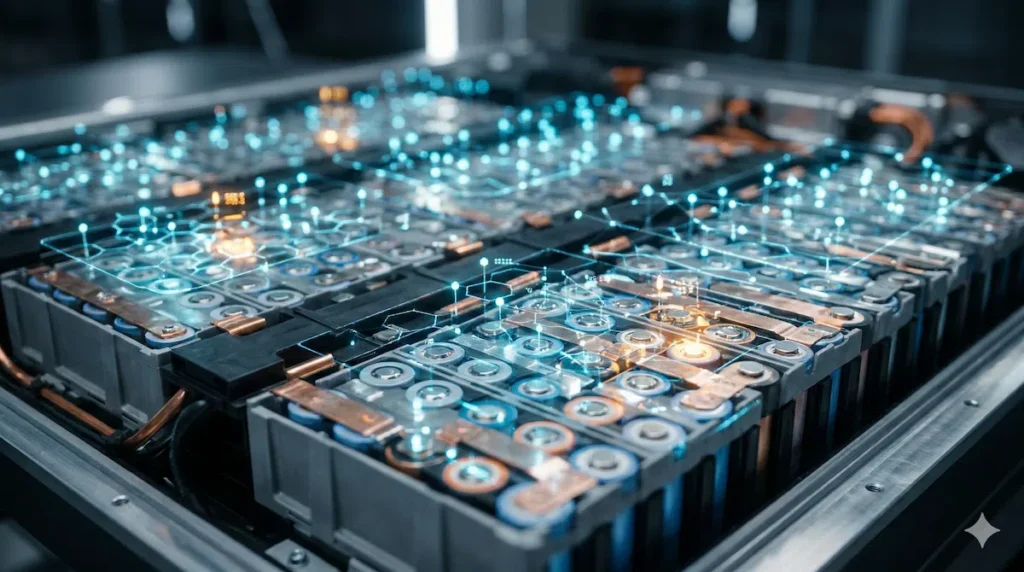
The most critical challenge for Indian EVs is thermal management. Lithium-ion batteries are highly sensitive to temperature spikes. A scorching Indian summer combined with heavy traffic can accelerate battery degradation or, in the worst-case scenario, trigger thermal runaway and devastating battery fires.
This is exactly where battery management systems AI steps in to save the hardware. Instead of relying on static, rule-based temperature gauges, startups are deploying sophisticated AI models that estimate State of Health (SOH) and State of Charge (SOC) with incredibly high precision.
- Predictive Thermal Control: AI algorithms continuously ingest real-time sensor data from the battery pack to detect weak cells and predict thermal runaway before it happens. By acting on these predictive models, the software dynamically adjusts the vehicle’s performance to avoid cascading cell failures.
- Extending Lifespan: Through predictive EV maintenance, edge AI running directly on embedded BMS chips balances cell loads during operation rather than just when the vehicle is idle. This maximizes capacity utilization and extends the battery’s operational lifespan even under grueling commercial delivery conditions.
Curing “Range Anxiety” with Smart Charging Grids
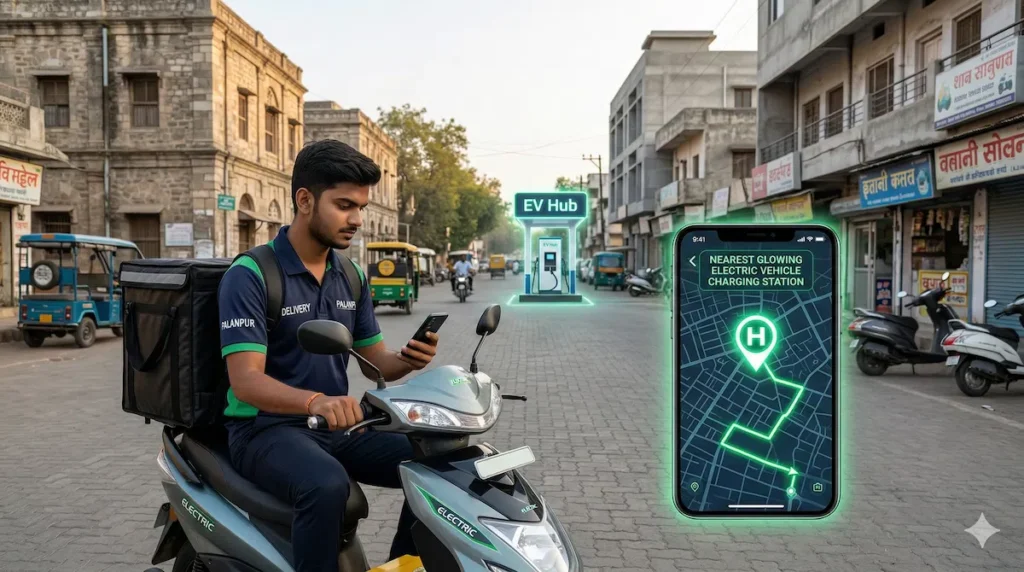
In a country where public charging infrastructure is still scaling—reaching around 30,000 public charging points by early 2026—the fear of running out of power is very real. For a gig-economy delivery rider or a commercial auto-rickshaw driver, a dead battery means lost daily wages.
To combat this, targeted climate tech software is being deployed to optimize how, when, and where vehicles charge.
- Smart Routing: True EV range anxiety AI doesn’t just look at the battery percentage. It analyzes a driver’s specific route, factoring in real-time traffic density, payload weight, and ambient temperature to provide a highly accurate, dynamic range prediction.
- Grid Optimization: Startups are developing smart charging grids India can rely on to prevent bottlenecks. These AI systems direct commercial fleet drivers to the nearest available public charging station just as their battery dips to an optimal recharge threshold, preventing massive queues at high-density plug locations.
The Market Impact in India
Why is this software-first approach capturing the attention of venture capitalists and policymakers?
- Protecting Asset Value: For B2B fleet operators, a degraded battery destroys profit margins. AI-driven BMS protects these expensive physical assets, ensuring cargo fleets remain economically viable over a full lifecycle.
- Economic Velocity: By heavily investing in localized battery tech and AI software—with fresh funding constantly flowing into homegrown battery innovators like Offgrid Energy Labs—India is reducing its reliance on imported, closed-loop battery systems.
- Restoring Consumer Trust: Following high-profile incidents of EV scooters catching fire in past years, consumer trust took a hit. AI is restoring that trust by guaranteeing a level of active safety that basic hardware simply cannot provide.
The Verdict
The hardware of an electric scooter can be easily commoditized and copied by competitors. But the proprietary algorithms that keep that scooter from overheating in Delhi traffic, or the predictive models that tell a delivery driver exactly when to recharge, cannot be easily replicated. The winner of the Indian EV race won’t just be the company that builds the best physical vehicle; it will be the startup with the smartest AI managing the ecosystem.
Want to see the macro picture? Read our massive 3,600-word Ultimate Guide on the State of AI in India 2026 here.
FAQs
How does AI prevent electric vehicle battery fires in India?
AI-powered Battery Management Systems (BMS) constantly monitor the temperature and voltage of individual battery cells. If the AI detects early signs of overheating or thermal runaway, it can dynamically throttle the vehicle’s power or safely shut down the battery pack before a fire starts.
What is predictive EV maintenance?
Predictive maintenance uses AI to analyze data from the vehicle’s sensors to predict when a battery or motor component is likely to fail. This allows fleet owners to repair or replace parts before a breakdown occurs, saving time and money.
How is AI helping with EV charging in India?
AI analyzes traffic, weather, and driving habits to give highly accurate range predictions. It also connects with smart grids to route drivers to available locations among India’s 30,000 public charging stations, reducing wait times and eliminating range anxiety.