
Key Takeaways
- The Second Wave: The Indian EdTech sector is pivoting from a model of expensive hardware and aggressive sales to highly scalable, AI-driven personalized learning.
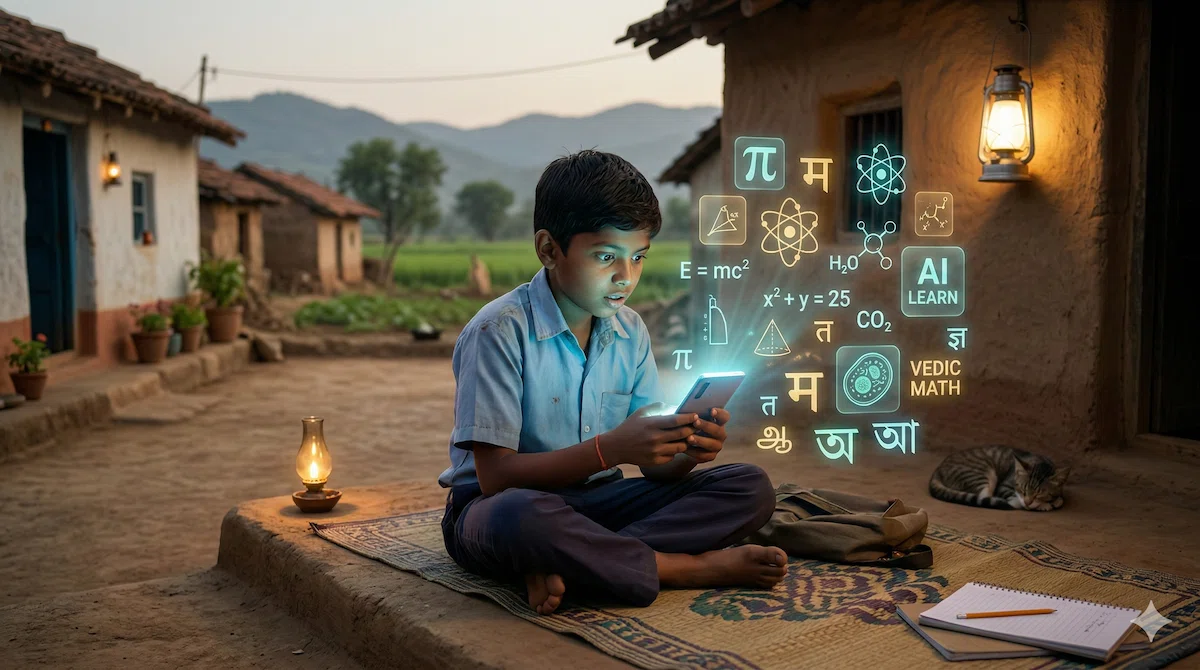
- Language is No Longer a Barrier: Breakthroughs in Indic language learning allow students in Tier-3 cities to master complex subjects like coding and advanced physics in their native tongues.
- Teacher Empowerment: Rather than replacing educators, AI acts as a co-pilot in crowded classrooms, automating administrative tasks so teachers can focus on actual human mentorship.
The first wave of Indian EdTech was loud, expensive, and ultimately flawed. It relied heavily on pushing costly tablets and aggressive sales tactics onto anxious parents. But as that bubble deflated, a much quieter, profoundly more impactful revolution began taking root.
Byju’s — once India’s most valuable startup — became the poster child of this model, before its well-documented collapse exposed the limits of sales-driven, hardware-heavy EdTech.
We are officially entering the “Second Wave.” Powered entirely by artificial intelligence, this new era is ditching the rigid, one-size-fits-all video lectures of the past. Today, the focus of AI in Indian EdTech is hyper-personalized intelligence. It is no longer about just digitizing the classroom; it is about fundamentally changing how a child learns, at a fraction of the cost.
The Shift to Scalable Intelligence
How exactly are startups utilizing AI to fix the deeply entrenched structural issues in India’s education system? The answer lies in two massive, highly practical use-cases.
1. 24/7 Personalized Vernacular Tutors
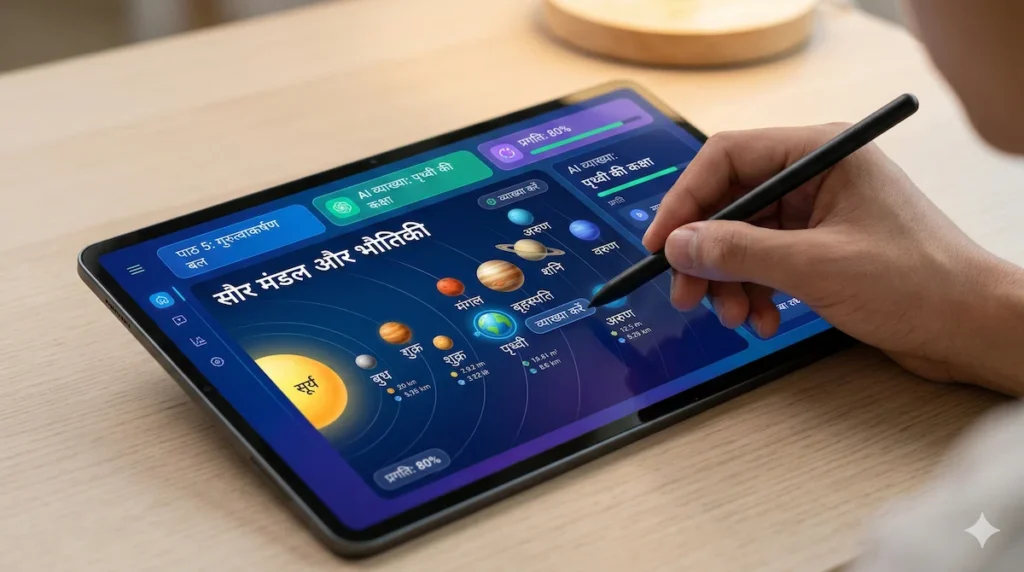
Historically, access to elite tutoring was a privilege reserved for students in top-tier metro cities who could afford hourly rates and spoke fluent English. AI is shattering this geographical and linguistic monopoly.
This shift is being driven by real platforms already live in the market. HCL GUVI, backed by IIT-Madras and IIM-Ahmedabad, now delivers courses in Tamil, Telugu, and Hindi across 300+ institutional partnerships. Startups like Stimuler are using voice AI specifically to help non-native English speakers build fluency, while newer entrants like SwaVid are building diagnosis-first, Socratic-style AI tutors mapped to CBSE and ICSE curricula in regional languages.
A student sitting in a Tier-3 town in Maharashtra can now learn Python programming entirely in Marathi. A high schooler in West Bengal can ask complex quantum physics questions in Bengali.
2. AI Co-pilots for Overburdened Teachers

There is a harsh reality in the Indian public school system: while India’s national pupil-teacher ratio has improved to 17:1 at the middle level and 21:1 at the secondary level according to the Ministry of Education’s UDISE+ 2025-26 report, this national average masks severe overcrowding in specific pockets.
Delhi’s middle-level PTR stood at 28:1 in the UDISE+ 2024-25 data, well above the national figure. Nationwide, over 1 lakh schools — 1,00,843 as of the 2025-26 report — still run on a single teacher, a number that has fallen but remains stubbornly persistent. In these overburdened classrooms, it is physically impossible for even the most dedicated educator to provide individualized attention to every child.
Instead of spending late nights grading papers, teachers can use AI to generate personalized quizzes for struggling students. By removing the administrative heavy lifting, AI allows teachers to get back to what they do best: human connection, empathy, and localized mentoring.
The Market Impact in India
To understand why this matters, we have to look at the demographics. India has the largest youth population in the world, with over 250 million school-going children. However, the quality of education remains drastically uneven.
India’s EdTech sector has produced more than 21,000 startups to date, with AI-focused EdTech companies alone numbering over 60 as of 2026 — signaling investor confidence is shifting decisively toward AI-native, vernacular-first models rather than the video-lecture platforms of the previous decade.
The rise of vernacular edtech startups represents a massive shift in capital and economic potential. By building rural education tech that operates seamlessly on low-bandwidth smartphones, these startups are unlocking the intellectual capital of the entire nation, not just the top 1%.
For investors, funding in the sector is real but concentrated at two very different scales. Most AI-native EdTech startups are still raising modest rounds — SuperKalam, an AI-powered UPSC test-prep platform, has raised $2.53M to date, while voice-first AI tutor Stimuler recently closed a $3.75M Pre-Series A. The outliers are a different story: Physics Wallah has raised over $310M and went public in late 2025, while Vedantu has raised $321.68M across 18 rounds.
AI allows these companies to scale their user base without needing to hire an army of human tutors or sales representatives. For the nation, it means a workforce that is genuinely upskilled and ready for the global digital economy.
The Verdict
The first wave of EdTech digitized the classroom, putting textbooks onto screens. But this AI-driven second wave is doing something far more vital: it is democratizing education in India. By providing every student with a world-class, endlessly patient tutor in their own language, AI is permanently breaking the urban-rural education divide.
FAQs
How is AI changing the Indian EdTech sector? AI is transitioning the sector from passive video lectures to active, personalized learning. Startups are using AI to create intelligent tutors that adapt to a student’s pace and AI assistants that help teachers manage large classrooms more effectively.
What role do personalized AI tutors play in rural India? Personalized AI tutors use advanced Indic language models to teach complex subjects in regional languages like Tamil, Hindi, or Bengali. This allows students in rural areas to access high-quality education without needing to be fluent in English.
Will AI replace teachers in Indian schools? No. AI is designed to act as a “co-pilot” for teachers. By handling administrative tasks like grading and generating quizzes, AI frees up teachers’ time, allowing them to focus on mentoring students and providing emotional support in crowded classrooms.