
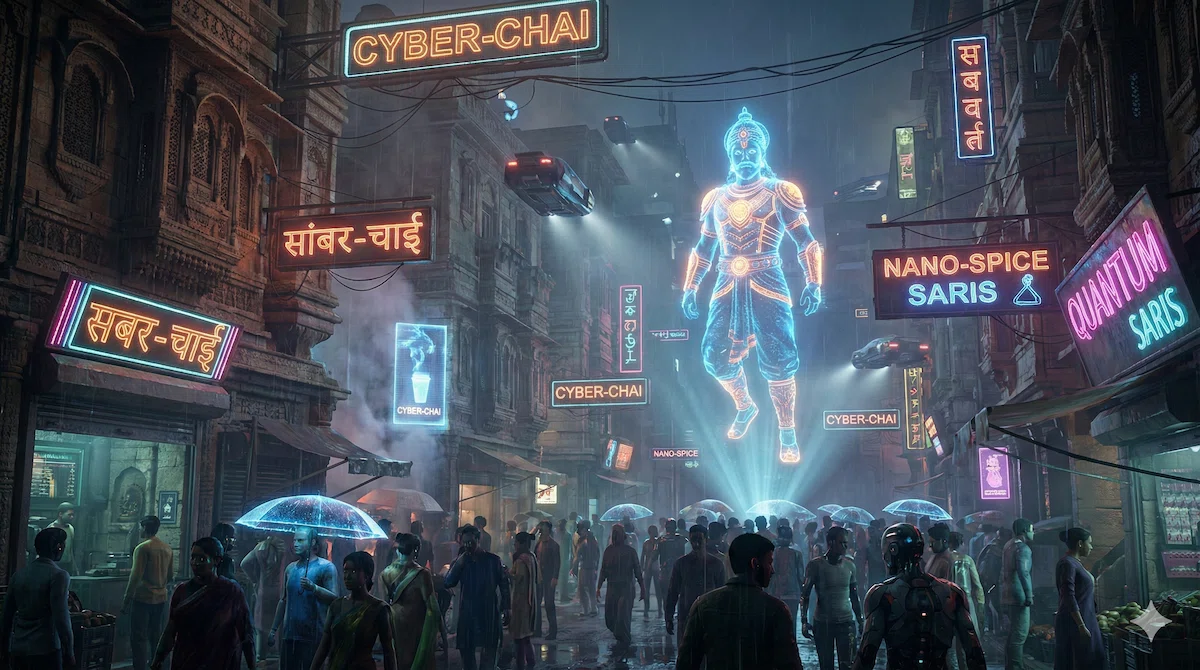
India’s generative AI-in-gaming market was valued at roughly $182.7 million (approx. ₹1,520 crore) in 2024, and is projected to grow at a 26.85% CAGR through 2035, according to Market Research Future. AI in Indian gaming is transforming everything from NPC behavior to content creation, with generative AI now powering anti-cheat systems and procedural game design.
Eight Indian companies—Loco, nCore Games, Nodwin Gaming, SuperGaming, WinZO, Nazara Technologies, Dream Sports, and Gamerji—are deploying machine learning and generative AI gaming technologies that are reshaping the industry. (Full breakdown below.)
The digital entertainment landscape is undergoing a massive transformation, and AI gaming in India is officially at the forefront of this revolution. For years, the Indian market was primarily seen as a massive consumer base for global titles.
Today, the narrative has flipped. Driven by a surge of innovative Indian AI gaming companies, local developers are no longer just participating in the global gaming economy; they are actively rewriting its rules.
By integrating advanced machine learning directly into game engines, these developers are creating dynamic, culturally rich experiences that were previously impossible. The secret weapon driving this massive boom? Generative AI games that adapt to the player, speak their language, and run flawlessly on the hardware they already own.
Here is a deep dive into the three core technologies driving the future of interactive entertainment across the subcontinent, followed by a full look at the 8 companies leading the way.
Smart NPCs: Conversing in Hindi, Tamil, and Telugu
Historically, video game characters have relied on rigid, pre-written dialogue trees. If you asked a character a question outside of the script, the game broke. The latest wave of AI gaming in India shatters this limitation through the use of NPC AI (Non-Playable Character Artificial Intelligence).
Leveraging the recent breakthroughs in Indic language Large Language Models (LLMs), developers are creating NPCs that can hold unscripted, real-time voice conversations.
Instead of reading text on a screen, players can literally speak into their phone’s microphone in Hindi, Tamil, or Telugu.
The AI character processes the spoken audio, understands the emotional tone, and generates a contextually accurate, fully voiced response in the same regional language.
This breakthrough means a player exploring a virtual bazaar can haggle with an AI merchant naturally, creating a level of immersion that English-first global titles simply cannot match.
A concrete example of this shift is already live: Hitwicket, a competitive multiplayer cricket game from Bengaluru-based Metasports with over 18 million users worldwide, runs a Generative AI real-time commentary engine that reacts dynamically to in-match events — the same underlying approach (real-time generative response instead of pre-scripted lines) that’s now being extended toward full NPC dialogue in Hindi, Tamil, and Telugu.
Procedural Generation: Building Culturally Accurate Open Worlds
Building massive, open-world games used to require hundreds of artists working for over a half-decade. Now, algorithms are doing the heavy lifting. Indian studios are using procedural generation to construct hyper-accurate, culturally resonant environments at a fraction of the cost and time.
Bengaluru-based startup Yesgnome is a real example of this in action — its Sketly AI platform is an AI-powered art creation tool built specifically for game studios, generating production-ready character designs, environments, UI elements, and storyboards, and was showcased at the India AI Impact Summit 2026 as one of India’s leading gaming-AI tools.
Whether generating the sprawling, neon-lit streets of a cyberpunk Mumbai or painstakingly recreating the architecture of ancient mythological cities like Ayodhya or Dwarka, AI tools can instantly generate textures, lighting, and terrain. This allows smaller indie studios to build massive worlds that rival the scale of high-budget Western studios, heavily accelerating the production of Generative AI games.
Mobile-First AI: High-End Graphics for Budget Androids
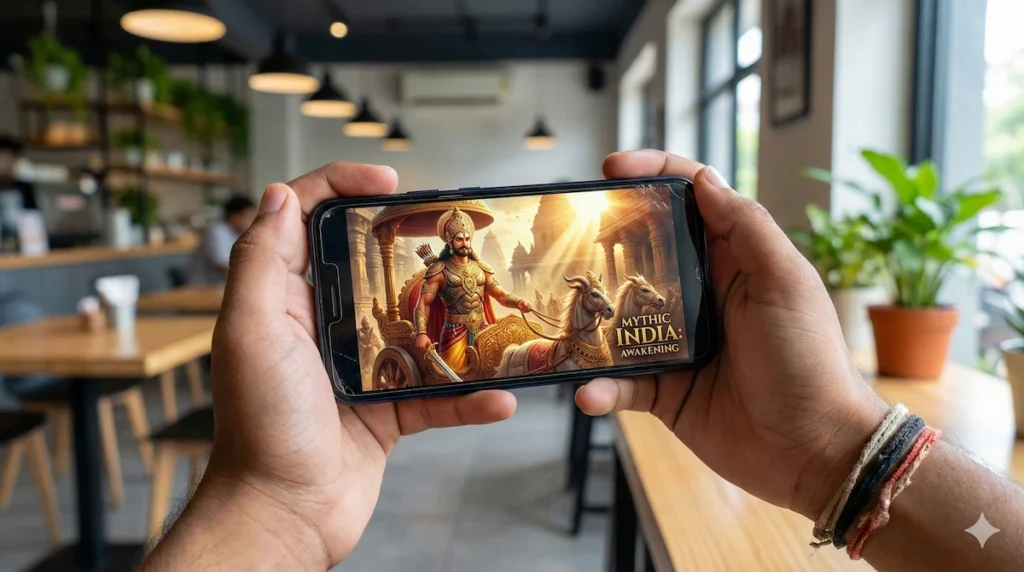
While Western developers often focus on high-end PC and console hardware, the reality of the Indian market is completely different. To succeed here, you have to dominate mobile. This is where localized mobile gaming truly shines.
Indian developers are actively deploying “Mobile-First AI” algorithms designed to optimize heavy computing tasks.
Instead of forcing a smartphone’s processor to render 4K graphics natively—which drains the battery and overheats the device—AI algorithms render the game at a lower resolution and instantly “upscale” it.
This ensures that players using budget Android smartphones experience console-quality, high-fidelity graphics without lagging or crashing.
Hitwicket, a competitive multiplayer cricket game from Bengaluru-based Metasports with over 18 million users worldwide, runs a Generative AI real-time commentary engine that reacts dynamically to in-match events.
By democratizing access to premium experiences, artificial intelligence is ensuring that the next generation of blockbuster games is accessible to the masses, regardless of their hardware budget.
FAQs
What are Generative AI games?
These are video games that use artificial intelligence algorithms to dynamically create content—like dialogue, music, quests, or entire landscapes—in real-time, rather than relying strictly on pre-programmed assets designed by human developers.
How is NPC AI changing player interactions?
Instead of choosing from a list of pre-written responses, players can use their microphone to speak naturally to in-game characters. The AI processes the speech and generates a unique, unscripted response, making the game feel incredibly lifelike.
Why is AI gaming in India focused heavily on mobile?
India is a mobile-first internet economy. Developers use AI optimization techniques to ensure that visually stunning, complex games can run smoothly on affordable Android smartphones, reaching a much larger audience.